
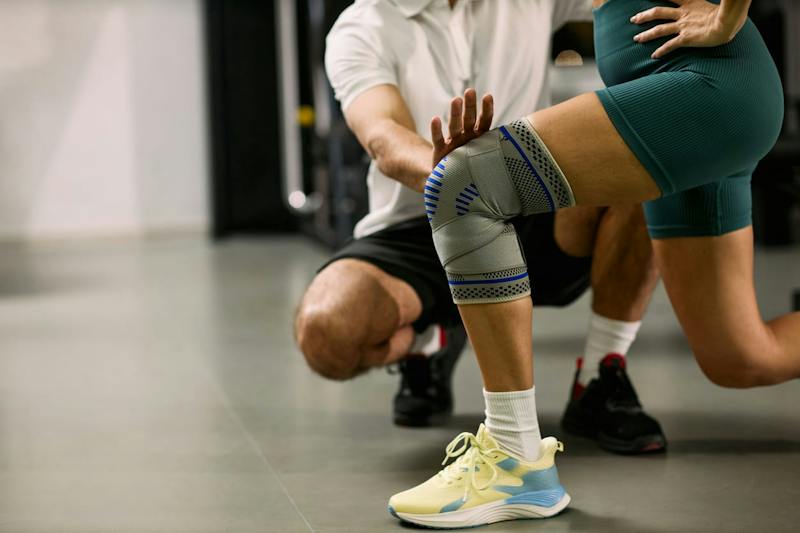
The best therapy program after spinal surgery is a phased, supervised physical therapy plan built around your specific procedure and coordinated directly with your surgeon. For many patients, structured exercise begins about four to six weeks after surgery, follows several clearly defined stages, and transitions into a long-term home exercise program.
Recovering from spine surgery is not a one-size-fits-all process. A patient who had a microdiscectomy will move through rehabilitation differently than someone recovering from a multi-level fusion. At New York Spine Institute (NYSI), orthopedic spinal surgeons and physical therapists work under one roof, so your therapy after spinal surgery in New York is shaped by the same team that performed or planned your procedure.
Since Alexandre B. de Moura, MD, FAAOS, founded NYSI in 2000, the practice has guided thousands of patients from surgery through full recovery across Long Island and New York City. In this article, we explain what an effective post-surgical therapy program includes, how it changes by procedure, and how to tell whether your recovery is on track.
What Does Physical Therapy After Spinal Surgery Involve?
Physical therapy after spinal surgery combines education, guided movement, and progressive strengthening to protect the surgical site while restoring function. At NYSI, a post-surgical therapy program typically includes:
- Postoperative precautions: Learning which movements to avoid, such as bending, lifting, or twisting, while the spine heals.
- Initial postoperative exercises: Gentle movements that promote circulation and early mobility.
- Assistive device training: Safe use of walkers, canes, or other aids during the first weeks.
- Brace management: Instruction on donning and doffing any required spinal brace.
- Stabilization-based exercises: Strengthening the deep core and back muscles that support the spine.
- Flexibility, balance, and proprioception work: Restoring range of motion and body awareness.
- Manual therapy: Hands-on techniques to ease muscle tension and improve mobility.
- Modalities: Electrical stimulation and ultrasound to help manage pain and support tissue healing.
Each patient also receives an overview of the postoperative rehabilitation process and their expected prognosis, so they understand what lies ahead.
What Are the Phases of Rehabilitation After Spine Surgery?
Rehabilitation after spine surgery generally moves through three phases: protection, strengthening, and return to function. Exact timing depends on your procedure, your health, and your surgeon's clearance, but most programs follow this sequence:
- Phase 1 – Protection and early mobility (roughly weeks 0–6): The focus is safe walking, pain control, incision healing, and following precautions. According to Mayo Clinic, patients usually stay in the hospital two to three days after spinal fusion, and early walking typically begins during that stay.
- Phase 2 – Structured strengthening (roughly weeks 4–12): Supervised therapy introduces core stabilization, flexibility, and progressive conditioning. A Cochrane systematic review of rehabilitation after lumbar disc surgery found that exercise programs starting four to six weeks after surgery led to faster improvement in pain and disability than no treatment, with no increase in reoperation rates.
- Phase 3 – Return to function (roughly month 3 onward): Therapy shifts toward work, sport, and daily-life demands, then transitions into an independent home program.
Fusion patients often progress more gradually through Phases 2 and 3, because bone needs time to knit. Mayo Clinic notes that it can take several months for fused vertebrae to heal into a solid unit.
Key takeaway: Timelines are guides, not deadlines. At NYSI, the surgical and therapy teams adjust each phase based on how your body is actually healing.
How Does Therapy After Spinal Surgery Differ by Procedure?
Therapy after spinal surgery differs by procedure because each operation changes the spine in a different way. Decompression procedures remove pressure from nerves but leave the spine's motion intact, while fusion permanently joins vertebrae and requires bone healing. The comparison below shows how NYSI's physical therapists typically approach common procedures:
|
Procedure |
Rehab focus |
General pace |
|
Microdiscectomy / lumbar disc microsurgery |
Nerve mobility, core stabilization, safe lifting mechanics |
Often the quickest return to light activity |
|
Laminectomy / foraminotomy |
Walking tolerance, posture, gradual strengthening |
Moderate; depends on number of levels treated |
|
Cervical disc replacement (e.g., Mobi-C) |
Preserving neck motion, posture, shoulder-blade strength |
Moderate; motion is encouraged within limits |
|
ACDF or lumbar fusion (TLIF, PLIF, ALIF, XLIF) |
Protecting the fusion, hip and core strength, body mechanics |
Slower; progression follows bone healing |
|
Scoliosis or complex deformity correction |
Balance, endurance, adapting to new alignment |
Longest; often staged over many months |
Your surgeon's operative findings shape these plans further. That is one reason NYSI keeps surgery and physical therapy under the same roof: the therapist knows exactly what was done and why.
Why Do Home Exercise Programs Matter After Spine Surgery?
Home exercise programs matter because recovery continues long after formal therapy visits end. The strength, posture, and movement habits built during rehab need daily reinforcement to protect the spine over time.
NYSI's physical therapy team prioritizes patient education for this reason. Before discharge from therapy, patients learn a personalized set of home exercises and the body mechanics to use at work, at home, and during exercise. Mayo Clinic notes that even when spinal fusion relieves symptoms, it does not prevent future back pain, which makes ongoing conditioning an important part of long-term spine health.
Why Does Coordination Between Your Surgeon and Therapist Improve Recovery?
Coordination between your surgeon and physical therapist improves recovery because both are working from the same information and the same goals. When questions arise, such as unexpected pain, slow progress, or readiness to advance, the answer comes quickly from someone who knows your case.
At NYSI, orthopedic spinal surgeons, physician assistants, pain management specialists, and physical therapists collaborate on one plan. Benefits of this model include:
- Precautions that match the exact procedure performed
- Faster adjustments when a patient is not progressing as expected
- Shared access to imaging, operative notes, and follow-up findings
- Consistent guidance from consultation through full recovery
Is Formal Physical Therapy Necessary After Spine Surgery, or Is Walking Enough?
Walking is an essential part of early recovery, but for most patients it is not enough on its own. Walking improves circulation and endurance, yet it does not target the deep stabilizing muscles, flexibility deficits, or movement patterns that often contributed to the original problem.
Some surgeons have historically questioned whether formal rehab is needed at all. The Cochrane review on rehabilitation after lumbar disc surgery helps answer that question: structured exercise starting four to six weeks after surgery improved short-term pain and function compared with no treatment, and none of the included trials reported an increase in reoperations. The review also found that programs starting immediately after surgery were not more effective than their comparison treatments, which supports a phased approach.
Walking is the starting point, and a guided therapy program builds on it.
What Are the Warning Signs That Your Recovery Needs Attention?
Warning signs that recovery needs attention include new or worsening symptoms rather than the gradual improvement expected after surgery. Contact your NYSI care team promptly if you notice:
- Fever, increasing redness, swelling, or drainage at the incision
- New or worsening numbness, tingling, or weakness in the arms or legs
- Pain that steadily increases instead of improving
- Calf pain or swelling, or sudden shortness of breath (seek emergency care)
- New loss of bowel or bladder control (seek emergency care)
You can reach NYSI at 1-888-444-NYSI (1-888-444-6974) on weekdays from 9:00 a.m. to 5:00 p.m. EST.
Frequently Asked Questions About Therapy After Spinal Surgery
How soon does physical therapy start after spine surgery? Guided walking and basic precautions usually begin in the hospital. Structured outpatient therapy often starts around four to six weeks after surgery, though fusion patients may begin later based on surgeon clearance.
How long does physical therapy last after spinal surgery? Many outpatient programs run about six to 12 weeks. The Cochrane review found that the average rehabilitation program in the studies it analyzed lasted 12 weeks. Complex fusion or deformity cases may need longer.
Can I do physical therapy at home only? Home exercises are a vital part of recovery, but supervised therapy allows a physical therapist to progress your program safely and correct form. Most patients benefit from supervised sessions before moving to an independent home program.
Where can I get therapy after spinal surgery in New York? NYSI offers physical therapy coordinated with its spine surgeons, with its main office in Westbury on Long Island and additional locations in Manhattan, Brooklyn, Queens, the Bronx, Westchester County, and Orange County, plus Marlton and West Orange in New Jersey.
Recover With the Coordinated Spine Team at New York Spine Institute
The most effective therapy after spinal surgery in New York is one built around your procedure, your goals, and constant communication with your surgeon. For more than two decades, New York Spine Institute has brought orthopedic spinal surgeons, pain management specialists, and physical therapists together to guide patients from consultation to full recovery.
Whether you are preparing for surgery or already recovering, the NYSI team, including Michael Friar, DPT, can create a rehabilitation plan tailored to you. Call 1-888-444-NYSI (1-888-444-6974) or schedule an appointment online.
This information is provided for educational purposes only and does not replace a consultation with a qualified spine specialist. Outcomes, risks, and suitability vary from patient to patient.
Sources
- Oosterhuis T, et al. Rehabilitation after lumbar disc surgery. Cochrane Database of Systematic Reviews, 2014.
- Mayo Clinic. Spinal fusion.
- New York Spine Institute. Physical Therapy Services.